
Guitar Vibrato: Types, Categories, and Control
Guitar vibrato isn’t “extra sauce,” and it’s definitely not just “wiggling the string.” It’s a core skill that decides whether a note sounds flat and lifeless—or like a voice with character. And yes, there are different types of vibrato, but only if you define “type” by the mechanics: what physically moves to modulate pitch. That’s why I’m grouping vibrato the right way here: fretting-hand, neck, hardware, and FX.
What Is Guitar Vibrato?
Guitar vibrato is the controlled repeated variation of pitch around a note. Good vibrato depends mainly on pitch control, width, speed and timing — not simply on shaking the string.
Vibrato vs tremolo: vibrato changes pitch; tremolo changes volume.
Explore more articles about technique, control and practical guitar playing in Guitar Technique & Skills.

First: Tremolo Is Not Vibrato
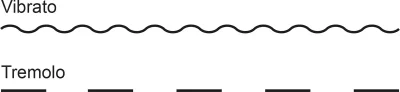
Vibrato = pitch modulation (the pitch moves up/down).
Tremolo = volume modulation (louder/quieter, or even on/off, without changing pitch).
Why the confusion? Because guitarists have been mixing the terms for decades. A “tremolo bar” is often called that, even though it’s technically a vibrato system (pitch). And “tremolo” on a guitar amp is usually volume.
Remember this:
- Do you hear the pitch moving? That’s vibrato.
- Do you only hear the volume pulsing? That’s tremolo.
Guitar Vibrato Is a Bend—But Not Every Bend Is Vibrato
This is the simplest correct definition:
- Bending = pitch modulation (the pitch goes up and/or returns back down).
- Vibrato = repeated pitch modulation (a wave motion), with control over speed and width.
In other words: guitar vibrato is often just bending, repeated in a controlled way. In other words: guitar vibrato is often just bending, repeated in a controlled way. If you’ve already worked through Bend Mastery, you’re already halfway there—you mainly need one extra layer: the speed curve (how slow or fast your vibrato moves throughout the note).
Important detail: vibrato is only “good” when you have a clear pitch center. Otherwise it sounds like you’re searching for the note.
Origins of Vibrato: “Dancing Around the Note”
Vibrato is probably older than most people think, because it didn’t start as a “guitar trick,” but as something human: the voice. A perfectly straight, sustained tone can quickly sound unnatural or synthetic to our ears. In real singing (and in many acoustic instruments) there’s almost always a small, natural micro-movement in pitch and intensity. That’s what makes a note feel alive.
On fretless instruments (the violin family, voice, slide-style traditions, and many world instruments) this is even more obvious: there’s no fixed fret that “locks” the pitch in place. That naturally leads to the idea of “dancing around the note”: you feel one pitch as the center, but you let it breathe gently around that center. In the beginning, this was mainly ornament and expression (not necessarily continuous). Later, in many styles, it became a fixed part of the tone—something that gives your sound “sing.”
On a fretted guitar, the mechanics shift: the pitch is more fixed, so the most natural route to vibrato often became bend & release (and in a subtler form: micro-movement along the string). But the idea stays the same: not searching for the note—making the note come alive.
Vibrato Notation

Vibrato notation is rarely precise. In notation and TAB it usually only tells you: vibrato yes/no (a wavy line or “vib.”). Sometimes slight vs wide is suggested by smaller or larger waves, and whammy bar vibrato may be labeled or drawn more angular/zigzag. But the exact type, speed, width, and curve are almost never specified. Bottom line: treat notation as a hint—the details come from the style and, above all, the recording.
Why Does Vibrato Work So Well?
Guitar vibrato works because it gives your ear more information right when a note is actually starting to die. You add movement while the volume drops—so the note feels longer, bigger, and more “human.”
The illusion of more sustain and “sing”
The note seems to hang on longer because there’s still life in it while the energy is fading.More attention without playing louder
You create focus with expression, not brute force.Pitch feels “intentional” (if your pitch center is solid)
With a stable center it sounds like “dancing around the note.” Without a center it sounds like you’re hunting for the pitch.
Vibrato as a Sustain Engine (Rate Curve)
Great players rarely use vibrato as one constant setting. They use a curve:
- Start: straight or slower vibrato
- Middle: steady tempo
- End: slightly faster (often also narrower) to keep the dying note “alive”
That’s why vibrato extends sustain in perception: you compensate for loss of energy with controlled micro-movement.
Tip: on electric guitar you can sometimes coax a note to bloom without a clear pick attack, because tiny left-hand impulses (and even subtle fret contact noise) can get amplified by gain/compression. Think of the kind of “endless note” effect you hear in the intro vibe of Foxey Lady.
Free or Locked to the Beat
Many players treat vibrato as something “random”: you feel it, you do it, done. But you can also approach guitar vibrato rhythmically. Vibrato has a speed (rate), and you can deliberately lock that rate to the beat—eighth-note vibrato, triplets, sixteenths—almost like playing an invisible shaker around one note.
This isn’t a theory trick. It makes your vibrato tighter and more musical, especially on long notes. You don’t have to be metronomic all the time—sometimes vibrato needs to breathe freely—but once you can “clock it,” you have real control. Then expression becomes a choice, not an accident.
That balance between technical control and musical expression is also at the heart of Guitar Technique vs Feel.
The Parameters of Vibrato
No matter which type you use, your control comes down to these eight parameters:
- Width / Depth – how far the pitch moves away from the original note
- Speed / Rate – how fast the wave moves
- Pitch Center – where the note “lives” (critical)
- Onset / Delay – does vibrato start immediately, or after a moment?
- Rate Curve – does the speed stay constant, or does it accelerate/decelerate through the note?
- Direction / Symmetry – mostly above the pitch (typical bend-vibrato), or more “around” the center (more classical feel)
- Shape – sine/triangle/square/saw/PWM/random, etc. (via FX)
- Mix (Dry/Wet) – how much original signal vs vibrato effect (via FX; push it and it can become more chorus-like)
If your vibrato sounds amateur, one of these is usually off: too wide, too fast, no pitch center, wrong onset/curve, sloppy direction, or FX that are too deep / badly mixed.
1. Fretting-Hand Vibrato
1.1 “Violin-Style” Vibrato (Longitudinal)

With longitudinal vibrato you move your fingertip left and right along the length of the string while staying between two frets. The result is a soft, rolling vibrato that works beautifully in ballads, clean passages, and notes that are meant to “ache” without getting aggressive. The pitfall is simple: don’t slide over the fret, because then the note jumps and your pitch center disappears instantly.
1.2 Bend & Release (Lateral)

This is the standard guitar vibrato: you bend the string up (or down, depending on string and position) and let it return in a controlled way to the original pitch. It’s perfect for long, singing notes and for styles where vibrato can be a strong emotional signature (blues, rock, lead). The most common mistake is mixing two directions inside one vibrato—going up and down around the pitch—which quickly sounds cartoonish and nervous. Pick one direction and train your return to the release pitch every time.
1.3 Wrist Vibrato
This is what you might call the “B.B. King vibrato”: wide, fast, present, slightly nervous—but still stable. The movement isn’t driven by the fingertip. It’s driven by the wrist and hand. The fretting finger holds the note in place while the hand supplies the controlled shake/roll that creates the pitch motion.
1.4 Micro Pressure Vibrato (Finger Pressure)

Here you barely see a visible bend. You create vibrato through tiny pressure variations with the fingertip, moving the pitch just enough to add life. This works especially well on guitars with higher/jumbo frets, and even scalloped frets. The result is a very subtle, small vibrato.
1.5 Slide / Bottleneck Vibrato

With slide (bottleneck) vibrato you let the slide “dance” very slightly around the pitch. It often reads as vocal vibrato: very human and very direct. It shines in roots, ambient, and slide phrasing where emotion matters more than millimeter precision. And yes—this vibrato can become overkill fast: tiring, melodramatic, or even “a yowling cat” if you use it on every note. One practical reminder: the slide replaces the fret. So the correct pitch doesn’t sit between frets—your slide should sit on top of the fret wire, with minimal pressure.
2. Neck Vibrato
With neck-bending vibrato you change string tension by gently “twisting” the guitar. In practice you push or pull the neck slightly with your fretting hand while your picking arm (against the body) provides the opposite force. That changes the tension across all strings at once, and the pitch moves with it. The result is usually a soft, slow, wide vibrato that can sound very musical—especially on clean tones. This is ideal when you want vibrato on chords or double-stops where classic fretting-hand vibrato becomes awkward or impossible.
3. Hardware Vibrato
3.1 Tremolo Arm / “Whammy Bar” Vibrato
Here you use the arm to modulate pitch. Subtle movement gives a shimmer; wider, more aggressive movement creates dives and raises. On floating systems you can also get that typical flutter. This works perfectly in surf, rock, and modern lead playing—and also in situations where you want extremely consistent vibrato, because the hardware does the work.
3.2 Bigsby-Style “Warble”
A Bigsby-style vibrato feels very different from a floating trem. It’s less acrobatic, less “flutter,” and more of a slow wobble—a syrupy warble that stays musical as long as you keep it small. This is the vibe for vintage tones, rockabilly, and clean/edge-of-breakup sounds where you want motion without show.
3.3 Behind-the-Nut Vibrato
Here you push or pull the string behind the nut, between the nut and the tuning machines. That creates a subtle shimmer and fast micro-effects that don’t always happen as “sparkly” with standard fretting-hand vibrato. On guitars where there’s enough room up there, this is a great extra color.
3.4 Behind-the-Bridge Vibrato
This is the behind-the-bridge version, on guitars where extra string length is available behind the bridge. The effect is often smaller and sometimes a bit “glitchy” or metallic—more texture than classic vibrato. It’s ideal when you want something different from the standard movements.
4. FX Vibrato (Pitch LFO)

FX vibrato is vibrato where you’re not doing the waving—an effect is. At its core it uses an LFO (low-frequency oscillator) to modulate pitch according to a chosen waveform, such as sine, triangle, square, saw, or PWM. You control it mainly with speed/rate and depth (how wide the pitch movement is).
Practical: 3 Quick Rules That Instantly Improve Your Vibrato
Rule one: play the note cleanly and let it “land” first. Only then add vibrato. That one change alone makes your sound more mature, because your pitch center stays clear.
Rule two: reduce width and increase control. A smaller vibrato that’s perfectly in tune almost always sounds bigger than a wide wobble that turns sharp or unstable.
Rule three: choose one vibrato per phrase. Not every word in a sentence is intense, and not every note needs the same emotional weight. Variety is what makes it musical.
Frequently Asked Questions
What is the difference between vibrato and tremolo on guitar?
Vibrato changes pitch. Tremolo changes volume. Guitarists often mix up those terms, especially because a so-called “tremolo bar” usually controls pitch, not volume. But technically, vibrato is pitch modulation and tremolo is volume modulation.
Which type of guitar vibrato should I learn first?
Start with standard bend-and-release vibrato with a stable pitch center. That is the core vibrato for most electric guitar styles and gives you the best foundation for control, timing, width, and expression.
How can I tell if my guitar vibrato is out of tune?
Record yourself and listen carefully to whether the note keeps returning to the same pitch center. If your vibrato keeps drifting upward and never truly comes back home, it usually means your vibrato is consistently sharp or unstable.
Why does my vibrato sound nervous or amateur?
Usually because the movement is too fast, too wide, or not centered around a controlled pitch target. In many cases, the hand is moving before the note is properly established. Slowing the motion down and improving pitch control usually fixes this fast.
Is neck vibrato safe for the guitar?
Yes, if you keep it subtle. Neck vibrato is meant for gentle pitch modulation, not for forcing the guitar out of shape. Used carefully, it can sound very musical, especially on chords and double-stops.
When should I use FX vibrato instead of hand vibrato?
Use FX vibrato when you want a more mechanical, repeatable, or stylized modulation that your hand would not naturally produce. It works especially well for lo-fi, ambient, retro, and texture-based sounds where consistency matters more than human phrasing.
Does good vibrato need to follow the beat?
Not always, but controlled vibrato often benefits from rhythmic awareness. You can play vibrato freely, but you can also lock its speed to the beat or subdivision. That gives you more control and makes long notes sound tighter and more musical.
What makes guitar vibrato sound expressive instead of exaggerated?
Good vibrato has a clear pitch center, controlled width, suitable speed, and the right onset. In other words, the note should land first, then the vibrato should support it. If the movement is too wide, too fast, or starts too early, the result often sounds dramatic in the wrong way.

Guitar Training Studio
Ready to Make Real Progress on Guitar?
Build better technique, timing and musicianship with structured guitar training, practical tools and personal coaching.