fb-pixel Skip to main content

Guitar Training Studio

Guitar Ear Training – Lesson 3

How to Recognize Major and Minor Chords by Ear

Can you tell whether a chord is major or minor just by listening? Discover how a single note changes the character of a chord. Learn to recognize major, minor and power chords through practical listening and singing exercises, and develop your chord recognition skills with Chord Hearo.
Level: Beginner Focus: Major & Minor Chords Skills: Listening & Recognition
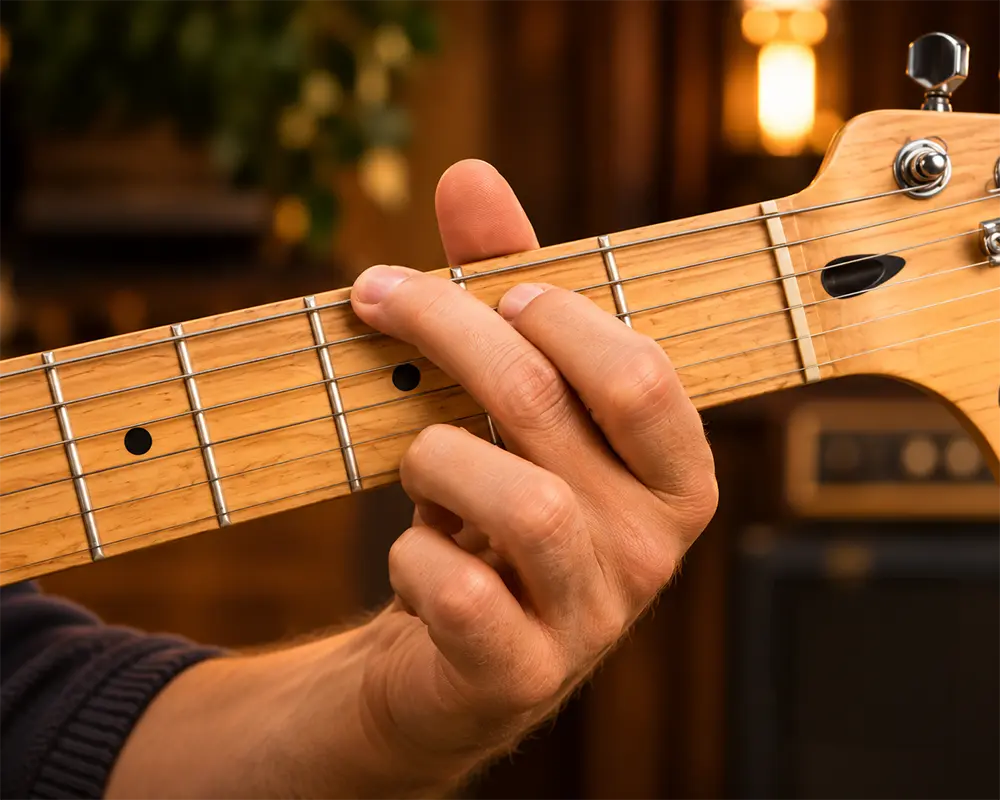
Guitarist playing a chord on an electric guitar in a warm recording studio
Quick Answer

How Can You Hear the Difference Between Major and Minor Chords?

Major chords often sound bright, open and happy, while minor chords tend to sound darker or sadder. The difference comes from a single note called the third. Changing that note changes the character of the entire chord.

Major Chord (A) A – C♯ – E · Bright, happy sound
Minor Chord (Am) A – C – E · Darker, sadder sound
Power Chord (A5) A – E · No major or minor quality
The Third Makes the Difference Major: 4 semitones · Minor: 3 semitones

The golden rule: Compare A major and A minor. Listen for the change in character, but don't confuse higher pitches with major chords or lower pitches with minor chords. Use your familiar melody references to double-check what you hear.

Hear the Difference Between Major and Minor Chords

After learning to hear major and minor thirds, the next step is to recognize the difference between major and minor chords.

Beginners often describe a major chord as brighter, more open or happier, while a minor chord tends to sound darker, sadder or more introspective. Those descriptions are useful, but they are only a starting point. The real goal is to hear the actual sound color of the chord.

One important warning: don't confuse pitch direction with chord quality. When chords move upward, people often get a more positive feeling. When chords move downward, they often sound more dramatic or sad. That can be misleading. A chord can still be minor and high, or major and low. So don't judge only by whether the sound goes up or down.
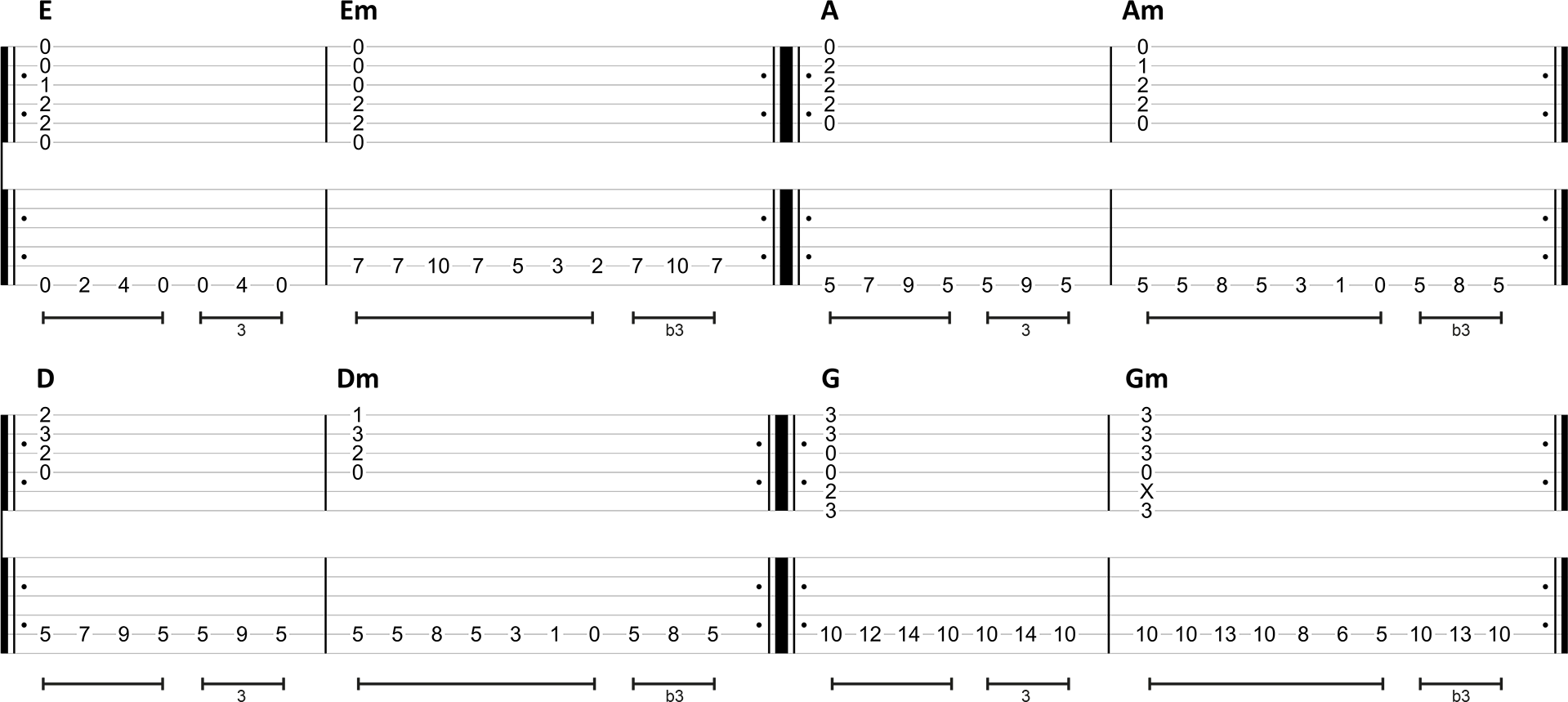
Guitar ear training example showing the difference between major and minor chords

Practice 1: Hear the Difference

Start with very easy open chords. Use A major and A minor. Those are accessible beginner chords and they make the contrast easy to hear.

  • Listen to A major. Play or listen to an A major chord and focus on its bright, open and happy character.
  • Switch to A minor. Now play or listen to an A minor chord and notice how the character changes. It sounds darker, sadder or more serious.
  • Repeat the comparison. Go back and forth between A major and A minor until the difference becomes clear.
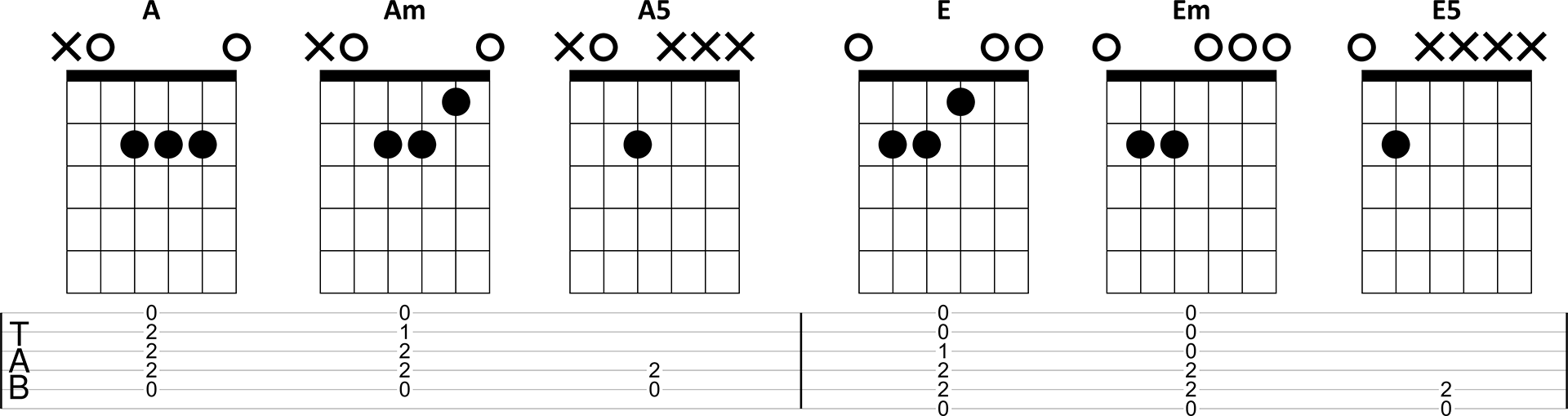
Comparison of A major, A minor and A5 power chord for guitar ear training

In the comparison above, you can also listen to an A5 power chord. A power chord has a much more neutral sound. It does not clearly sound major or minor. That makes it useful as a contrast: A major sounds bright, A minor sounds darker, and A5 sounds flatter and more neutral.

Tip: Use the words happy and sad as a quick shortcut, but always double-check by listening carefully and by singing along. A high chord is not automatically major, and a low chord is not automatically minor.

Practice 2: Sing Along with the Chord

A very effective way to train your ear is to sing with the chord. This helps you connect what you hear with what you can reproduce using your own voice.

  • Play an A major chord. Sing something simple over it, for example the beginning of Frère Jacques.
  • Play an A minor chord. Now sing something like Seven Nation Army over the chord.
  • Notice the fit. The major chord and major-third material feel different from the minor chord and minor-third material. That contrast is exactly what you want to train.
  • Repeat with other roots. For example: G and G minor, D and D minor, E and E minor.

Practice with Chord Hearo

Use Chord Hearo to practice recognizing major and minor chords by listening.

  • Open Chord Hearo. Open the ear training tool and click Select to access the chord types.
  • Select Major and Minor only. Deselect all chord types except Major (maj) and Minor (min). Make sure these two remain selected.
  • Click Select again. Close the chord selection and return to the exercise.
  • Click Start. Listen carefully to each chord and decide whether it sounds major or minor before answering.
  • Sing before answering. If you're unsure, try singing the beginning of Frère Jacques for a major-third reference, or Seven Nation Army for a minor-third reference. Compare the sound with the chord you just heard.
  • Try different instrument sounds. Use piano or MIDI sounds when available. This helps you recognize chord quality without relying too much on a familiar guitar tone.

Practice regularly, even if it is only five focused minutes a day. With time, your ear will start to recognize the difference between major and minor chords much faster and more reliably.

Once this becomes easier, you can expand your ear training to more chord types and more advanced listening work.

Common Mistakes When Recognizing Major and Minor Chords

1. Relying Only on Happy and Sad

Major chords are often described as happy and minor chords as sad. These associations are useful, but they're not absolute rules. Musical context, rhythm and voicing can influence how a chord feels. Learn to recognize the sound of the third instead of relying entirely on emotional descriptions.

2. Confusing Chord Quality with Pitch

A chord played higher on the fretboard isn't automatically major, and a lower chord isn't necessarily minor. Pitch and chord quality are different concepts. Compare C and Cm in the same register so you can focus on the change from E to E♭ rather than a change in pitch or voicing.

3. Assuming Every Rock Chord Is Major or Minor

Many rock and metal riffs use power chords, which contain only the root and fifth, sometimes with an additional octave. Without a third, a power chord is neither major nor minor. Don't confuse a heavy, distorted guitar sound with a particular chord quality.

4. Using Beating or Tuning as the Only Clue

You may hear subtle beating or tension in sustained chords, partly because of equal temperament. But both major and minor chords can produce these effects. Beating isn't a reliable major-or-minor test. Treat it as an additional listening observation, not as a substitute for recognizing the third.

5. Checking the Chord Before Making a Decision

Looking at your fretting hand or checking the chord name before answering defeats the purpose of ear training. Listen, decide, then verify. Try singing the third you believe you hear before checking the notes. Gradually practice with different root notes, voicings and instrument sounds.

Frequently Asked Questions About Major and Minor Chords

1. How can I recognize major and minor chords by ear?

Start by comparing major and minor chords with the same root note, such as C and Cm. Listen to how their character changes when the third moves from E to E♭. Major chords often sound brighter, while minor chords tend to sound darker. Focus on recognizing the changing third rather than relying only on emotional descriptions.

2. What makes a chord major or minor?

In a basic triad, the third determines whether the chord is major or minor. A major triad contains a root, major third and perfect fifth. A minor triad contains a root, minor third and perfect fifth. For example, C major is C – E – G, while C minor is C – E♭ – G.

3. Are power chords major or minor?

Neither. A power chord contains the root and perfect fifth, sometimes with an additional octave, but no third. For example, C5 contains C and G. Without E or E♭, the power chord has no major or minor quality of its own. The surrounding harmony can still suggest a major or minor key.

4. Can I recognize major and minor chords without perfect pitch?

Yes. Recognizing chord quality is a relative pitch skill. You don't need to identify the exact chord name or its root note. You only need to recognize the musical relationship between its notes. Regular listening comparisons and singing the third can help develop this ability.

5. How can I practice recognizing major and minor chords?

Use the Chord Hearo ear training tool and begin with Major (maj) and Minor (min) chords. Listen to the chord, identify its quality and check your answer. Once you can distinguish both consistently, add Power Chords (5). Practice with different roots and instrument sounds for a few focused minutes each day.

Wouter Baustein - Guitar Coach

Guitar Training Studio

Ready to Make Real Progress on Guitar?

Build better technique, timing and musicianship with structured guitar training, practical tools and personal coaching.