Play w/Me · U2 · Guitar TAB
Play along with Pride (In the Name of Love) by U2 and practice its iconic guitar riff with clear, on-screen guitar TAB. This Play w/Me video is designed for endless guitar practice. Follow the four-beat count-in, play the riff four times, take a one-bar break and repeat. No talking. No distractions. Just grab your guitar, follow the TAB and keep playing until you've got it.
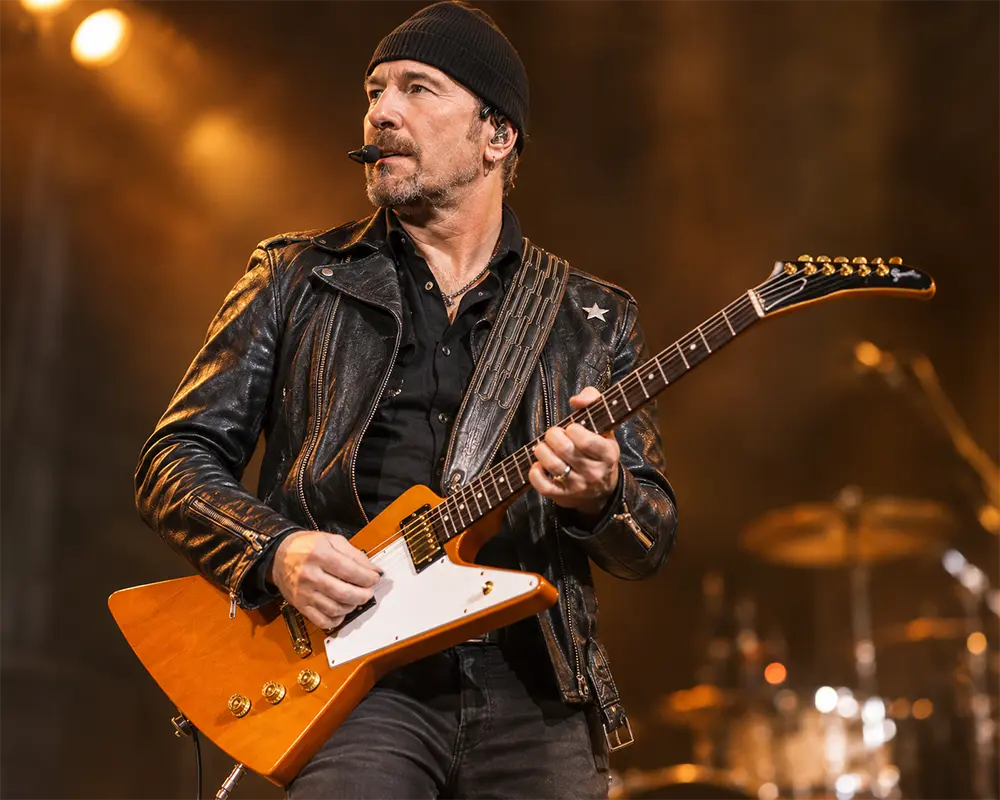
Learn the iconic guitar riff from Pride (In the Name of Love) by U2 with this free Play w/Me guitar play-along. The arrangement is played in E major, at 105 BPM in 4/4, using standard tuning (EADGBE) without a capo. Follow the on-screen guitar TAB and four-beat count-in, play the riff four times, then take a one-bar break before repeating. The looping format is designed for endless guitar practice: no talking, no distractions, just playing along and improving your timing, accuracy and consistency.
Artist: U2
Guitarist: The Edge
Key: E major
Time Signature: 4/4
Tempo: 105 BPM
Guitar: Electric
Tuning: E–A–D–G–B–E (standard)
Capo: No
Delay: Dotted eighth note (1/8D) – 429 ms
Sound/Effects: Bright, slightly driven tone with rhythmic delay and reverb.
Grab your guitar and play along with Pride (In the Name of Love) by U2. Follow the on-screen guitar TAB at 105 BPM. Start with the four-beat count-in, play the riff four times and take a one-bar break before repeating.
The guitar riff from Pride (In the Name of Love) is a perfect example of how The Edge combines rock guitar with techniques commonly used in funk music. Although U2 is not a funk band, his rhythmic approach shares several important characteristics with funk guitar playing.
One of the secrets behind The Edge's playing is his rhythmic right-hand technique. Rather than treating every note as an isolated picking movement, he often uses a continuous rhythmic motion to create drive, energy and a strong sense of groove.
This approach is closely related to funk guitar technique, where the picking hand maintains a steady rhythmic movement while selected notes and chords are emphasized.
Another characteristic is the use of muted strings and percussive scratch sounds. These short, rhythmic noises become part of the groove rather than unwanted string noise. The picking hand provides the attack, while the fretting hand helps control which strings are muted.
If you want to develop this rhythmic approach, start with our Guitar Timing Exercises . These exercises are a useful starting point for developing the steady right-hand movement and rhythmic control used in funk guitar and many rock guitar riffs.
The Edge's characteristic sound also relies heavily on rhythmic delay. For this Play w/Me arrangement at 105 BPM, set your delay to a dotted eighth note (1/8D), approximately 429 ms.
The delay repeats interact with the notes you play, creating additional rhythmic movement. However, the effect works best when your original picking is precise. Practice the riff without delay first, then add the effect once your timing and articulation are consistent.
The Edge is often underestimated as a guitarist because his parts rarely rely on flashy solos or extreme speed. But don't mistake musical simplicity for technical simplicity.
His playing combines funk-inspired right-hand technique, percussive string muting, precise rhythmic accents, dynamic control and sophisticated sound design. Add perfectly synchronized delay effects, and even a seemingly simple riff can become surprisingly challenging.
Many guitarists focus on speed and shredding, but playing fast is only one aspect of technique. Try reproducing The Edge's groove, articulation and timing without hiding behind effects. Playing fewer notes doesn't necessarily make you a less demanding guitarist.
Below you'll find the complete chord chart for Pride (In the Name of Love) by U2, including the song structure, chord progressions, repeats and guitar parts played by The Edge. The chart distinguishes between the main riff, harmonics, arpeggios and solo sections.
Below you'll find the guitar riffs and solo TAB for Pride (In the Name of Love) by U2. The Edge combines rhythmic picking, percussive articulation and melodic guitar parts to create the song's distinctive sound. Use these TAB sheets alongside the Play w/Me video to practice the different guitar parts individually before connecting them into the full song.
The recognizable main guitar riff is built around a repeating B–E–A–F#m chord progression. The Edge's rhythmic picking and articulation give the riff its distinctive energy and forward drive.
Pay particular attention to rhythmic accuracy, right-hand movement and string muting. The groove depends on consistent timing and controlled accents rather than simply playing the correct notes.
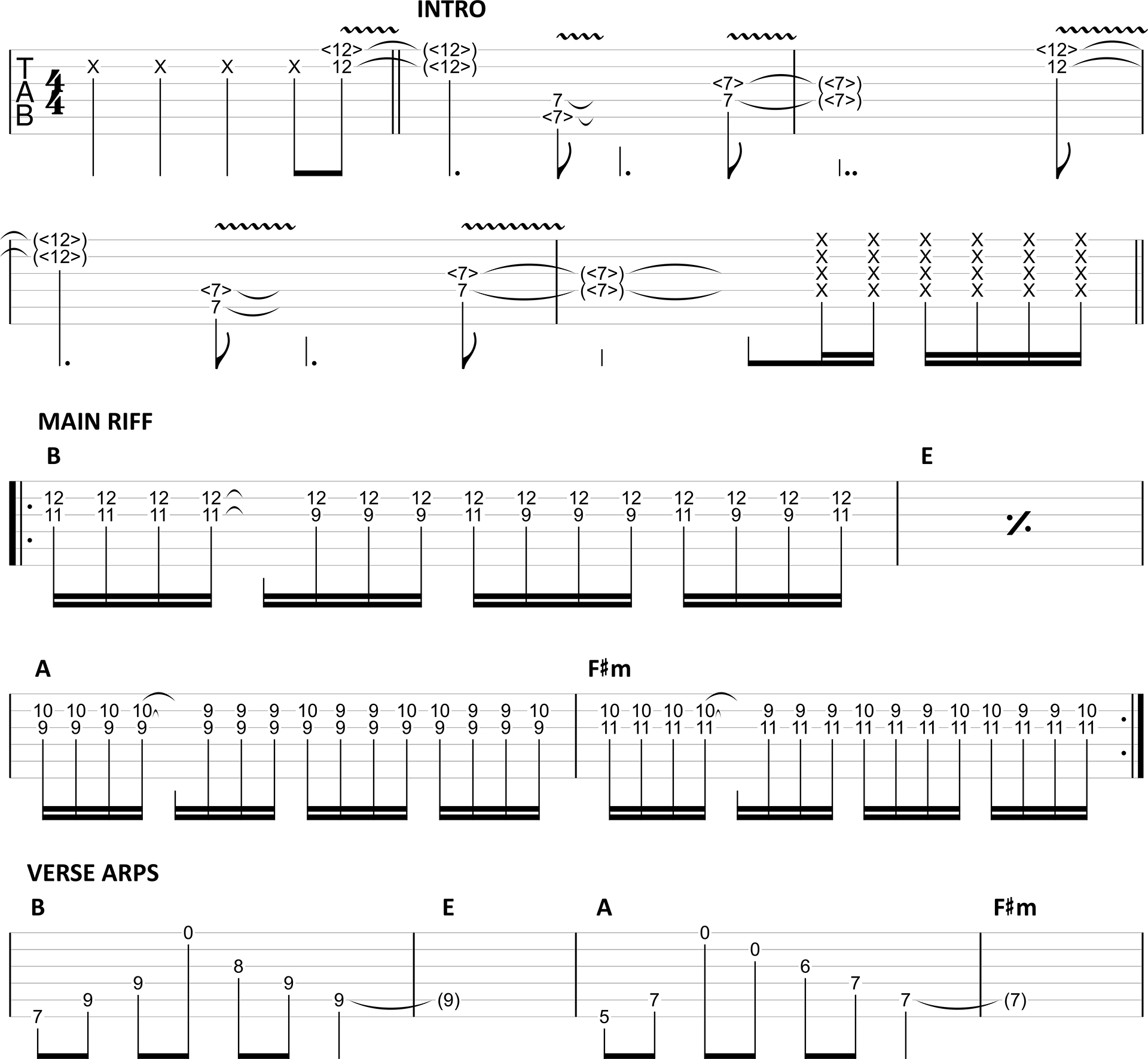
Keep your picking hand relaxed and maintain a steady rhythmic motion. Focus on the accents that define the riff, and avoid interrupting the groove between notes.
Use controlled string muting to create the characteristic percussive scratch sounds. These sounds contribute to the rhythm and should be played deliberately, not treated as accidental string noise.
Practice the riff without effects until the rhythm feels consistent. Then add a dotted eighth-note delay (1/8D – 429 ms at 105 BPM). Listen carefully to how the repeats interact with your original notes.
The guitar solo sections introduce additional melodic ideas while maintaining the song's rhythmic energy. The focus is on phrasing, articulation and accurate timing.
Practice the solo in short musical phrases. Pay attention to the attack, sustain and duration of each note. Work slowly before increasing the tempo to 105 BPM.
Guitar tone: use a bright electric guitar sound with controlled overdrive, rhythmic delay and subtle reverb. Avoid excessive distortion so that the individual notes remain clear.
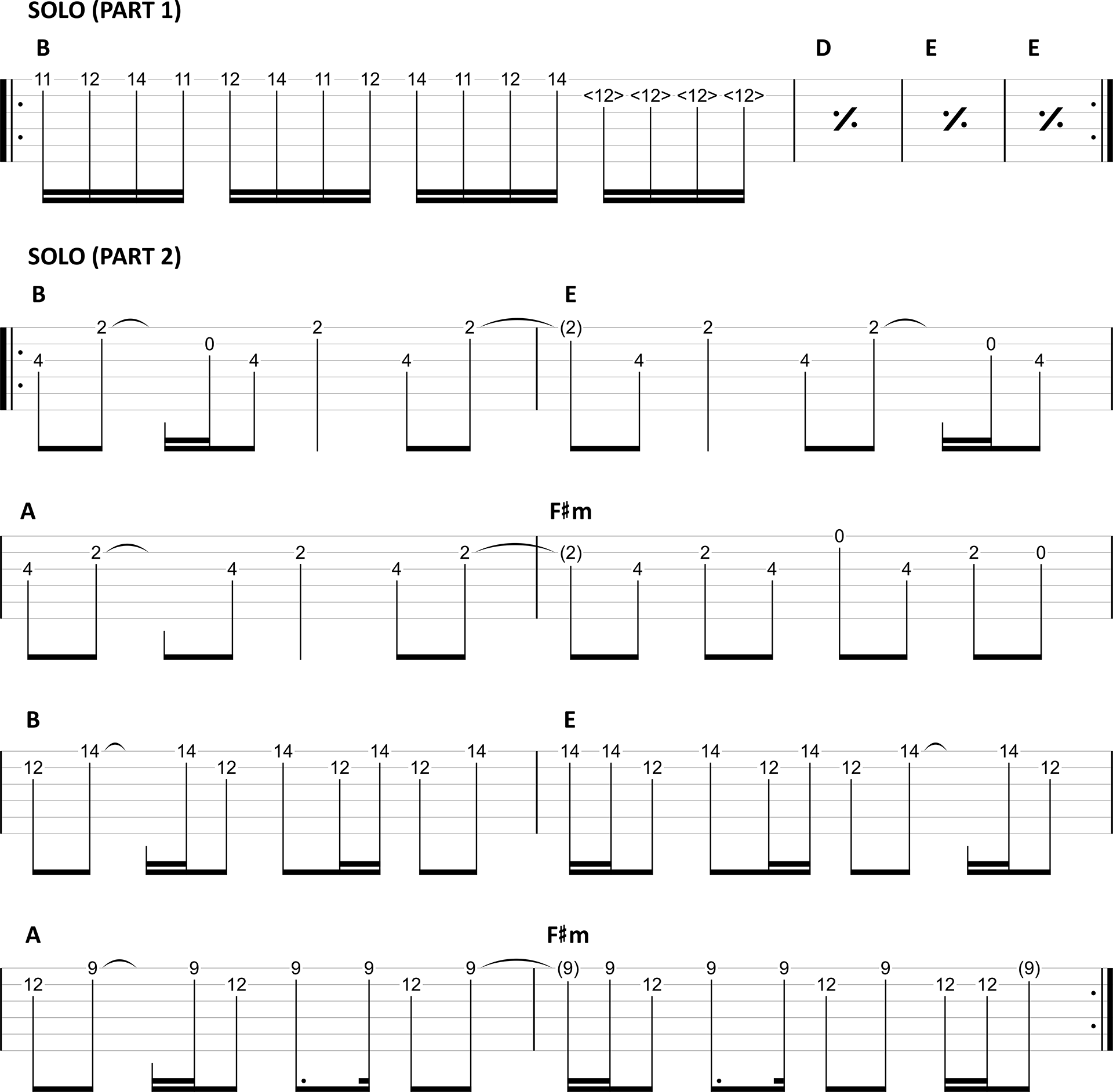
Practice tip: start with the main riff and concentrate on timing, right-hand drive and clean articulation. Practice without delay first, then add the effect once the rhythm is consistent. Work on the solo sections separately and gradually increase the tempo to 105 BPM. Remember: accurate rhythm and musical expression are more important than speed.
Pride (In the Name of Love) by U2 is a great example of how The Edge combines rhythmic precision, percussive guitar technique and delay effects. The riff may sound straightforward, but small mistakes can quickly affect its groove. Here are five common mistakes to avoid.
One of the biggest challenges is not finding the correct notes, but playing them with the right timing and rhythmic accents. Even small timing errors can make the riff lose its characteristic drive.
Practice the rhythm slowly before concentrating on speed. Pay attention to the placement of each note and keep a consistent pulse. Work toward 105 BPM in 4/4 only when the riff feels rhythmically secure.
The Edge's playing shares several characteristics with funk guitar technique, particularly the rhythmic movement of the picking arm. Many guitarists try to create more energy by playing harder, resulting in unnecessary tension and inconsistent timing.
Keep your picking arm and wrist relaxed. Develop a controlled rhythmic motion and use accents rather than excessive force to create drive. The groove should feel energetic without becoming stiff or exhausting.
Percussive scratch sounds are an important part of this rhythmic guitar approach. However, there's a big difference between deliberately muted string attacks and accidentally hitting unwanted strings.
Practice controlling the muted strings with your fretting hand while maintaining a steady picking motion. Make sure the percussive attacks fit the rhythm and don't interfere with the clearly defined notes of the riff.
The Edge's signature guitar sound relies heavily on rhythmic delay. For this arrangement at 105 BPM, a dotted eighth-note delay (1/8D – approximately 429 ms) is a useful setting.
However, delay repeats cannot correct inaccurate timing. They can actually make rhythmic mistakes more noticeable by repeating them. Practice without delay first, then add the effect once your picking and accents are consistent.
It's tempting to use heavy distortion to create a powerful rock guitar sound. However, excessive gain can make the rhythmic articulation, muted scratches and delay repeats difficult to distinguish.
Start with a bright, slightly driven electric guitar tone. Add rhythmic delay and a little reverb, but keep the original guitar attack clearly audible. The Edge's sound depends on clarity, dynamics and rhythm, not simply on the amount of distortion.
For more practice with rhythmic control, check out our Guitar Timing Exercises. They provide a useful foundation for developing the precise picking and strumming control needed for this type of guitar playing.
Yes, playing Pride (In the Name of Love) accurately can be surprisingly challenging. Although the basic chord progression is relatively straightforward, reproducing The Edge's guitar technique and sound requires considerably more control.
The challenge lies in combining rhythmic precision, funk-inspired picking, percussive muting, dynamics and delay effects. Guitarists who are comfortable with technically demanding solos may still struggle to reproduce his distinctive groove and articulation.
The main riff is suitable for intermediate players, but mastering the complete performance and sound can require advanced musicianship.
The main chord progression in Pride (In the Name of Love) is B–E–A–F#m. This progression appears throughout the intro, verses and choruses.
The first solo section also introduces a progression based on B–D–E–E. Check the complete guitar chord chart for the song structure and different guitar sections.
Start by learning the notes and fret positions shown in the Pride guitar TAB. Practice the picking pattern slowly, concentrating on accurate timing and consistent articulation.
Pay particular attention to the rhythmic accents and percussive string muting. Keep your picking hand relaxed and develop a controlled, steady groove before increasing the tempo.
You can also improve the underlying rhythmic technique with our Guitar Timing Exercises.
For this Play w/Me arrangement at 105 BPM, a useful rhythmic delay setting is a dotted eighth note (1/8D), approximately 429 milliseconds.
This creates rhythmic repeats that interact with the notes you play. Start with a moderate delay mix and adjust the feedback so the repeats remain clearly defined without overwhelming the original notes.
Practice the guitar part without delay first. Precise picking and timing are essential because the delay repeats whatever you play, including mistakes.
Standard tuning (E–A–D–G–B–E) is used for this arrangement. No capo is required.
The Play w/Me version is arranged in E major. You can follow the provided guitar TAB without changing your guitar's standard tuning.
Our Play w/Me arrangement uses 105 BPM in 4/4 time. Start at a slower tempo if necessary, then gradually work toward 105 BPM while maintaining accurate picking, string muting and rhythmic accents.
For independent practice, use our free Smart Click metronome. Consistent timing is more important than reaching the target tempo quickly.
The Edge is known for combining bright electric guitar tones with rhythmic delay. For this arrangement, start with a relatively clear sound, a little overdrive and some reverb.
Add the dotted eighth-note delay to create the characteristic rhythmic interaction between the original notes and their repeats. Keep the sound defined enough for the percussive attacks and individual notes to remain audible.
Remember that the effects are only part of the result. The Edge's rhythmic technique, articulation and dynamics are equally important to his recognizable guitar sound.
Divide the solo into short musical phrases and study the guitar solo TAB. Focus on accurate note placement, articulation, phrasing and timing.
Practice without effects until you can play each phrase cleanly. Gradually increase the tempo and add delay once the original notes are rhythmically consistent.
Don't focus exclusively on speed. The goal is to reproduce the musical expression, rhythmic feel and sound of the guitar part.

Guitar Training Studio
Build better technique, timing and musicianship with structured guitar training, practical tools and personal coaching.
www.guitarstudio.be (Belgium)
www.guitartrainingstudio.com (International)
c/o Wouter Baustein
Driehoekstraat 1, BE-3891 Gingelom
+32.(0)476.666.300
info@guitarstudio.be
CoC: 0872.862.121
VAT: BE0872862121
IBAN: BE33-7350-0967-6746
BIC: KREDBEBBXXX
© 2000 – 2026 All Rights Reserved
Web apps & development by Baustein.digitalWe use cookies to enhance your experience and analyze traffic. You can accept all, decline, or adjust your settings. Some features may not work without consent.