
Stompboxes vs Multi-FX vs Floor Modelers vs Rack: The Main Differences
All of these systems can produce professional guitar tones, but they organise your rig in very different ways. Modern guitar setups now also include software plugins and increasingly blur the line between hardware and software.
| System | Main Strength | Main Weakness | Best Suited To |
|---|---|---|---|
| Individual stompboxes | Hands-on control and complete freedom to choose each effect | More cables, power, switching and potential complexity | Personal rigs, real amps, simple boards, tone experimentation |
| Traditional multi-FX | Many effects, presets and routing options in one portable unit | More menu navigation and greater dependence on one device | Cover bands, home practice, compact live setups |
| Floor modeler / profiler | Complete amp, cabinet, effects and routing rig in one device | More complexity and a higher entry price | Direct-to-PA rigs, touring, complex live shows, recording |
| Rack system | Advanced routing, protection and centralised control | Transport, wiring and system complexity | Large live rigs, touring systems, complex switching |
| Plugins / amp sims | Maximum studio flexibility, recall and re-amping | Computer, interface and low-latency monitoring required | Home recording, studios, production and silent practice |
| Hybrid rig | Combines favourite analog and digital tools | Can become complicated if poorly planned | Players who want specific pedals plus modelling, presets or software |
None of these formats automatically sounds better. The important difference is workflow: how quickly you can build sounds, change them, troubleshoot them and reproduce them in the situations where you actually play.
Individual Stompboxes: Maximum Hands-On Control
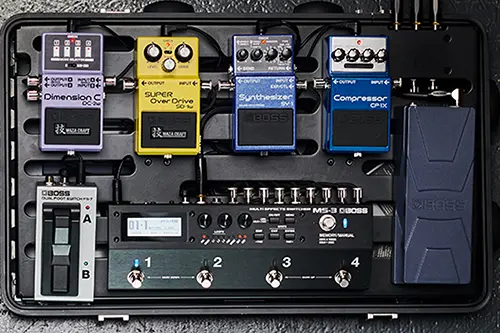
Individual pedals remain popular because the relationship between control and result is extremely direct. Turn the drive knob, change the delay feedback, move an EQ band or switch one effect off and you immediately hear what happened.
That makes stompboxes not only practical but educational. You learn what each part of the signal chain actually contributes instead of treating the complete guitar sound as one preset.
A pedalboard is also modular. You can combine different brands, keep the pedals you love, replace one weak link and expand slowly rather than replacing an entire platform.
Advantages of Individual Guitar Pedals
- Direct physical controls with little or no menu diving.
- Freedom to choose the exact compressor, drive, modulation, delay or reverb you prefer.
- Easy to replace or upgrade one effect at a time.
- Failure of one pedal does not necessarily take down the complete rig.
- Excellent for learning signal flow and effect interaction.
- Easy to integrate with traditional guitar amplifiers.
Disadvantages of Individual Pedals
- Patch cables, power supplies and connectors create extra failure points.
- Large boards can become expensive and heavy.
- Switching several pedals at once may require tap dancing or an additional loop switcher.
- Recreating exact settings can be difficult if pedals do not offer preset memory.
- It is very easy to keep buying pedals simply because there is space for another one.
Once a board grows beyond a few pedals, signal order starts to matter more. Our Guitar Pedal Order guide explains where common effects normally sit and when changing that order makes sense.
Traditional Multi-Effects Units: Maximum Convenience in One Box
A multi-effects unit combines many effects and routing tools in one device. Depending on the model, that may include drives, compressors, modulation, delay, reverb, pitch effects, loopers, MIDI control, recording functions and sometimes amp and cabinet modelling.
The biggest advantage is not simply the number of effects. It is recall. A complete sound can change when you press one footswitch.
Instead of switching off a chorus, activating a delay, changing a drive pedal and adjusting an amp channel separately, one preset or scene can recall the complete combination.
Advantages of a Multi-FX Unit
- Many effects in one compact device.
- Preset recall for complete songs or sections.
- Fast switching between very different sounds.
- Usually much less cabling than a large pedalboard.
- Headphone practice and recording are often built in.
- Some units can connect directly to a PA or audio interface.
- Ideal when you need many sounds but want to carry very little gear.
Disadvantages of Multi-FX Units
- Editing may involve screens, menus and software.
- One hardware failure can remove a large part of your complete rig.
- Huge numbers of effects and presets can distract from actually playing.
- Players can become dependent on downloaded presets without understanding how the sounds are built.
- Changing one effect may be slower than simply reaching for a physical knob.
Multi-FX vs Floor Modeler: They Are Not Exactly the Same Thing
The terms are often used interchangeably, but they describe slightly different priorities.
A traditional multi-effects unit is primarily a collection of effects and routing tools in one device. A floor modeler goes further by putting much more emphasis on recreating amplifiers, speaker cabinets, microphones and complete guitar signal chains.
Modern systems such as Quad Cortex, Helix, Fractal FM9 and TONEX blur that distinction because they can combine effects, amps, cabinets, routing, presets and other processing inside one hardware platform.
Once the device can generate the complete amp-and-cab sound internally, it no longer has to sit in front of a traditional guitar amplifier. It can become the entire rig.
Modern Floor Modelers and Profilers: A Complete Rig at Your Feet
This is the biggest change compared with older generations of multi-effects.
A modern floor modeler can potentially replace:
- your pedalboard
- your guitar amp
- your speaker cabinet
- a microphone on the cabinet
- MIDI switching hardware
- part of your recording interface workflow
Instead of thinking in terms of individual effects, you can build a complete virtual rig:
Guitar → Drive → Amp → Cabinet → EQ → Delay → Reverb → PA
One preset might represent an entire clean rig. Another can contain a completely different amplifier, cabinet, gain structure and effect chain.
Modeling, Profiling and Capturing
Not every modern system creates sounds in exactly the same way.
Traditional modelling recreates the behaviour of amplifiers, cabinets and effects through digital models. Other systems can also capture or profile the response of real amplifiers, pedals or complete signal chains.
For the player, the practical result is similar: an enormous number of rigs can be stored inside one piece of hardware and recalled instantly.
Why Floor Modelers Are So Powerful Live
- Complete rigs can change per song.
- Scenes or snapshots can change several parameters simultaneously.
- Outputs can go directly to a PA.
- Stage volume can be dramatically reduced.
- In-ear monitoring becomes easier to integrate.
- The same basic sound can be reproduced from venue to venue.
The trade-off is that you are placing a lot of responsibility in one device. Learning the system properly matters just as much as buying it.
Direct to PA: Why Digital Rigs Changed Live Guitar
With a traditional pedalboard, the guitar normally ends up in a guitar amplifier and speaker cabinet. A modeller can instead generate the amp and cabinet sound internally and send a line-level signal directly to the PA system.
A typical direct rig might be:
Guitar → Floor Modeler → PA / Audio Interface / FRFR Monitor
This can reduce stage volume, eliminate microphone placement problems and make the sound more repeatable from one venue to another.
It also works particularly well with in-ear monitoring. If stage volume is part of your decision, see Hearing Protection for Musicians.
Presets, Scenes and Snapshots: Why Switching Matters
Presets are one of the biggest practical differences between conventional stompboxes and digital rigs.
A preset can recall an entire signal chain. A scene or snapshot may go further by changing several parameters inside that same rig without reloading everything.
For example, one song could use:
- Verse: clean amp, compressor and light chorus.
- Chorus: more gain, wider delay and louder output.
- Solo: additional boost, longer delay and more mids.
With traditional pedals, that may require several footswitches. With a well-programmed digital rig, each section can be recalled with one press.
For a guitarist playing twenty or thirty songs with very different tones, that can matter more than whether one isolated pedal sounds fractionally different in a bedroom comparison.
Guitar Plugins and Amp Sims: The Software Rig
The other major change is that the guitar rig no longer has to exist entirely in hardware.
Plugins and amp simulators can put amps, cabinets and effects directly inside your DAW. For recording, that creates an extremely flexible workflow.
A basic setup can be as simple as:
Guitar → Audio Interface → DAW → Amp / FX Plugin
Why Plugins Are So Useful for Recording
- Complete guitar sounds are saved with the project.
- You can change amps and cabinets after recording.
- Effects can be automated inside the DAW.
- Multiple guitar rigs can run without owning several physical amps.
- Recording silently becomes easy.
- You can keep a clean DI track for later re-amping.
Re-Amp Without Replaying the Part
One of the biggest advantages is recording the clean DI signal while monitoring through a processed guitar sound.
Later, you can change the amp, cabinet, distortion, EQ or effects without playing the performance again.
That is especially valuable during mixing, because the guitar tone can be adapted to the arrangement rather than being permanently committed during tracking.
The Boundary Between Plugins and Hardware Is Disappearing
Software and hardware are increasingly becoming part of the same ecosystem.
Some platforms allow sounds or presets created in software to move into compatible hardware, while others allow plugin-based devices or tones to become part of a hardware rig.
This means the old distinction between “studio plugin” and “live hardware” is becoming less rigid.
Disadvantages of Plugins
- You need a computer and audio interface.
- Monitoring latency must remain low enough to feel natural.
- A mouse is less convenient than a footswitch during performance.
- Live use may require MIDI controllers and more computer-related troubleshooting.
- Software compatibility and operating-system updates become part of the rig.
For home recording and production, however, plugins are now one of the most practical guitar-rig options available.
What Rack Systems Still Do Extremely Well
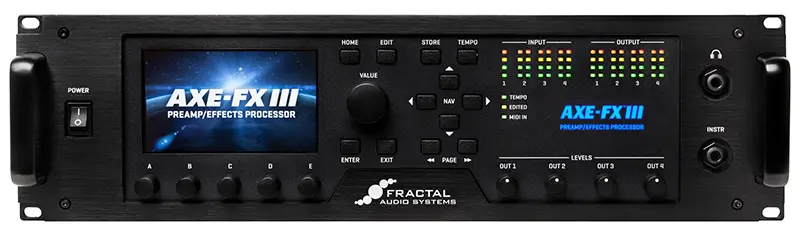
Rack systems treat the guitar rig more like a complete technical system than a collection of devices around your feet.
The processing, wireless receiver, power distribution, switching, interfaces and other equipment can stay protected in a rack while a separate foot controller handles the performance controls on stage.
This is attractive when the rig has become too complex to organise safely on a conventional pedalboard.
Advantages of Rack Guitar Systems
- Expensive hardware stays protected inside a rack case.
- Cleaner stage layout with fewer devices around your feet.
- Excellent for advanced MIDI and switching systems.
- Complex wiring can remain permanently connected.
- Useful when multiple devices need to function as one integrated rig.
- Very suitable for repeatable touring or production setups.
Disadvantages of Rack Guitar Systems
- More equipment to transport.
- Higher initial complexity.
- More planning and wiring.
- Often unnecessary for small gigs or home use.
- A complete professional rack can become expensive very quickly.
Rack FX vs Floor Modeler
Rack units and floor modelers can sometimes run very similar processing. The real difference is often physical architecture.
A floor modeler puts the processing and foot controls in one device. A rack system keeps the processing away from your feet and uses a separate controller.
The floor approach is simpler to transport. The rack approach can be cleaner and more protected when a rig becomes large or technically complex.
If all you need is one processor and a few footswitches, the rack may solve a problem you do not actually have.
Home Practice: Which System Makes the Most Sense?
Home players often benefit disproportionately from digital systems because headphones, amp simulation, effects and USB recording can all be available without a loud amplifier.
Plugins are another obvious option if your computer and audio interface are already part of your practice setup.
That does not make individual pedals useless at home. A small pedalboard into a good practice amp can be extremely inspiring and teaches you a lot about building sounds.
But buying an elaborate rack system purely for bedroom practice usually adds complexity without solving a real problem.
Gigging: Pedalboard, Multi-FX or Floor Modeler?
For live playing, setup speed and repeatability become much more important than they appear at home.
A small pedalboard with four or five reliable pedals can be extremely fast and robust. A large board with multiple power supplies, loopers and twenty patch cables is a different story.
A floor modeler can be even faster: connect guitar, power and outputs, load the correct preset and play.
The correct answer depends on how many sounds you need. If your entire show uses one core tone with a few variations, separate pedals may remain beautifully simple. If every song requires a different amp, delay, modulation and gain structure, preset-based switching becomes far more attractive.
Original Band vs Cover Band
Original music often rewards a rig built around a smaller number of carefully developed sounds. That can make stompboxes, a real amp or a hybrid rig especially appealing.
Cover bands often face a different challenge. One song may require a clean funk tone, the next a high-gain rock sound, followed by chorus, dotted-eighth delay or a completely different amp character.
That is exactly where multi-FX and modelling systems excel: not because they are automatically better, but because they can reproduce very different rigs almost instantly.
Four-Cable Method: Combining a Multi-FX With a Real Amp
A multi-effects unit does not have to replace your amplifier.
With the four-cable method, effects can be placed on both sides of the amp's preamp. Effects such as wah, compression and drive can sit before the preamp, while modulation, delay and reverb can run through the effects loop.
Conceptually:
Guitar → Multi-FX front effects → Amp preamp → Multi-FX loop effects → Amp power section
This can give you digital preset control while keeping the sound and response of the amplifier you already like.
Do Stompboxes Sound Better Than Multi-Effects?
There is no useful universal answer.
A great analog drive pedal can sound fantastic. So can a good digital drive model. A dedicated delay may have a character you prefer, while a digital platform may offer many delay types, tempo synchronisation, presets and routing that the single pedal cannot provide.
Sound quality depends on the actual devices, gain structure, monitoring, amplifier, speaker system and how the player uses them.
Modern floor modelers have also made the old idea that “analog always sounds better” increasingly difficult to defend as a general rule.
The practical question is not whether analog or digital wins in theory. It is whether the system produces the sounds you need reliably in the environment where you actually use it.
Latency in Digital Guitar Rigs
Digital processing introduces some latency because the signal has to be converted and processed. In a well-designed modern system, that delay is normally small enough that most players do not notice it during normal playing.
Problems can arise when several digital devices are chained together, each performing its own conversion and processing.
The same issue matters with plugins. Your audio-interface buffer size, computer performance and complete monitoring path determine how immediate the guitar feels.
Think about the complete signal path rather than judging each digital device in isolation.
Reliability: Which Rig Fails More Gracefully?
Individual pedals have a modular advantage. If one chorus pedal dies, you may still be able to finish the gig without chorus.
But large pedalboards also contain many patch cables, power connectors and individual components, creating many potential failure points.
With an all-in-one digital system, there may be fewer cables and components, but the central processor becomes more important. If it stops working, much of the rig may disappear at once.
A computer-based live rig adds another layer: operating system, interface, software, controller and computer all become part of the signal chain.
Good live reliability therefore comes from simplicity, quality cabling, sensible power distribution and having a backup plan — not from assuming one technology cannot fail.
Which Option Is Cheapest?
It depends entirely on how far you take each approach.
Four affordable stompboxes can cost less than a flagship modeller. Twenty boutique pedals, a premium board, isolated power, switcher and high-quality cabling can cost considerably more.
Likewise, a digital unit can be economical when it replaces pedals, an amp, a cabinet simulator, headphone system and possibly an audio interface.
Plugins may appear inexpensive compared with hardware, especially if you already own a computer and interface. But a complete live plugin setup may require additional controllers, interfaces and backup solutions.
Compare the complete rig, not just the first item you put in the shopping cart.
Before expanding a rig simply because more gear looks attractive, ask what you actually need. The same principle applies to instruments themselves: How Many Guitars Do You Really Need?
Hybrid Guitar Rigs: Often the Best of Both Worlds
Many players eventually stop treating analog, digital hardware and software as competing religions.
You may love one particular overdrive pedal but prefer digital delays and reverbs. You may want a real amplifier but use a multi-FX for MIDI switching. You might use a floor modeler as your complete live rig while recording with plugins at home.
Or you may use exactly the same basic digital ecosystem in software and hardware, moving sounds between studio and stage where the platform allows it.
A hybrid system lets you preserve the parts of your rig that genuinely matter while using digital technology to simplify everything else.
A Simple Hybrid Rig Example
One practical setup might look like:
Guitar → Favourite Drive Pedal → Floor Modeler → PA or Amp
Another could be:
Guitar → Wah → Drive → Amp → Effects Loop → Multi-FX for Chorus / Delay / Reverb
And a studio/live combination might be:
Studio: Guitar → Interface → Plugins
Live: Guitar → Hardware Modeler → PA
The point is not to maximise the number of devices. It is to give every piece of equipment a clear job.
Do You Actually Need Amp Modelling?
If you already own an amplifier you love and mostly play through it, you may not need hundreds of amp models.
On the other hand, amp modelling becomes extremely useful for silent practice, recording, direct-to-PA gigs, fly dates and situations where carrying a traditional amplifier is impractical.
Choose features because they solve real problems, not because the specification list is impressive.
Which System Teaches You the Most About Guitar Tone?
Stompboxes make the signal chain very visible. Compressor, overdrive, chorus, delay and reverb are physically separate, so it is easy to understand how one stage affects another.
Multi-FX and floor modelers can teach exactly the same concepts if you build patches yourself. In fact, some make experimentation easier because you can move blocks around instantly without reconnecting cables.
Plugins can do the same in the studio, where it becomes very easy to duplicate a track, change only one component and compare the result.
The danger is not digital equipment. The danger is using hundreds of presets without ever asking why they sound the way they do.
Which Guitar Rig Is Best for Beginners?
Beginners usually benefit from simplicity.
A few individual pedals can teach signal flow very clearly, but you do not need a pedalboard at all when you are first learning. A small multi-FX can also be excellent because it provides many sounds for a relatively compact investment.
Plugins can be a practical option if you already practise through a computer and audio interface.
Avoid buying a professional touring system before you understand what problem it is supposed to solve.
If you are still choosing the instrument itself before worrying about effects, start with Which Starter Guitar Should I Buy as a Beginner Guitarist?.
The same principle applies to guitars themselves. See Types of Guitars: Electric, Acoustic, Classical and More.
How to Choose Between Stompboxes, Multi-FX, Modelers, Plugins and Rack Gear
Ask yourself what you actually need during a normal week of playing.
- Do you use only a handful of sounds? A small pedalboard may be all you need.
- Do you need many completely different sounds? Multi-FX becomes very attractive.
- Do you want your entire amp and effects rig in one device? A floor modeler makes more sense.
- Do you play direct to PA? A modeler can simplify the entire rig.
- Do you use a real amp you love? Stompboxes or a hybrid setup may make more sense.
- Do you record mainly in a DAW? Plugins may be the most flexible solution.
- Do you need advanced MIDI and system routing? A rack or sophisticated digital rig may be justified.
- Do you travel frequently? Weight and setup time become important.
- Do you mostly play at home? Headphones and easy recording may matter more than stage switching.
Build for the musician you are now. You can always change the system when your real requirements change.
Stompboxes vs Multi-FX vs Floor Modelers vs Plugins: Final Comparison
Individual pedals give you physical control, modularity and the freedom to build a highly personal signal chain.
Traditional multi-effects units give you large effect libraries, presets, fast switching and compact convenience.
Modern floor modelers go further by combining effects with complete amp and cabinet rigs, sophisticated routing and direct-to-PA operation.
Rack systems remain valuable when routing, protection and system integration become complex enough to justify them, while plugins offer enormous flexibility for recording, recall and re-amping.
For many guitarists, a hybrid rig is the practical middle ground.
The right system is not the one with the most expensive components or the longest feature list. It is the one that lets you get the sounds you need, change them reliably and spend more time playing than troubleshooting gear.
For more guides about guitars, pedals, signal chains, tone and equipment, explore Gear, Tone & Setup.
Frequently Asked Questions
Are individual pedals better than a multi-effects unit?
Not automatically. Individual pedals offer modularity and direct physical control, while multi-effects units provide presets, portability and fast switching. The better choice depends on how many sounds you need and how you prefer to work.
What is the difference between a multi-FX and a guitar modeler?
A multi-FX focuses mainly on combining many effects in one device, while a modeler also focuses heavily on reproducing guitar amplifiers, speaker cabinets and complete signal chains. Many modern units combine both functions.
What is a guitar profiler or capture system?
Profiling or capturing systems analyse the response of an existing amplifier, pedal or signal chain and create a digital representation that can be recalled later. This is different from selecting a pre-built amp model, although modern platforms may offer both approaches.
Can a floor modeler replace a guitar amp?
Yes, if it includes amp and cabinet modelling. It can often be connected directly to a PA, recording interface or full-range monitor without using a traditional guitar amp and speaker cabinet.
Can guitar plugins replace physical amps and pedals?
For recording and home practice, often yes. A plugin can provide amps, cabinets and effects inside a DAW. Live use is possible too, but requires a suitable computer, audio interface, monitoring system and usually some form of foot control.
Are stompboxes better for learning guitar tone?
They can make signal flow easier to understand because each effect is physically separate. Multi-FX, modelers and plugins can teach the same concepts if you build your own signal chains instead of relying only on presets.
Is a multi-effects unit good for gigging?
Yes. Preset recall, compact transport, direct outputs and fast switching make multi-effects units especially useful when a live set requires many different tones.
When does a rack guitar rig make sense?
Rack systems are most useful when you need advanced routing, protected equipment, complex switching or a repeatable professional touring setup. They are usually unnecessary for simple home or local-gig rigs.
What is the four-cable method?
The four-cable method connects a multi-effects unit both before and after a guitar amp's preamp. This allows effects such as drives and wah to run before the preamp while delay, reverb and modulation can run through the effects loop.
Is a hybrid guitar rig a good idea?
Yes. A hybrid rig can combine favourite individual pedals with digital effects, amp modelling, plugins, preset switching or MIDI control, allowing you to keep the parts you value while simplifying the rest of the system.
